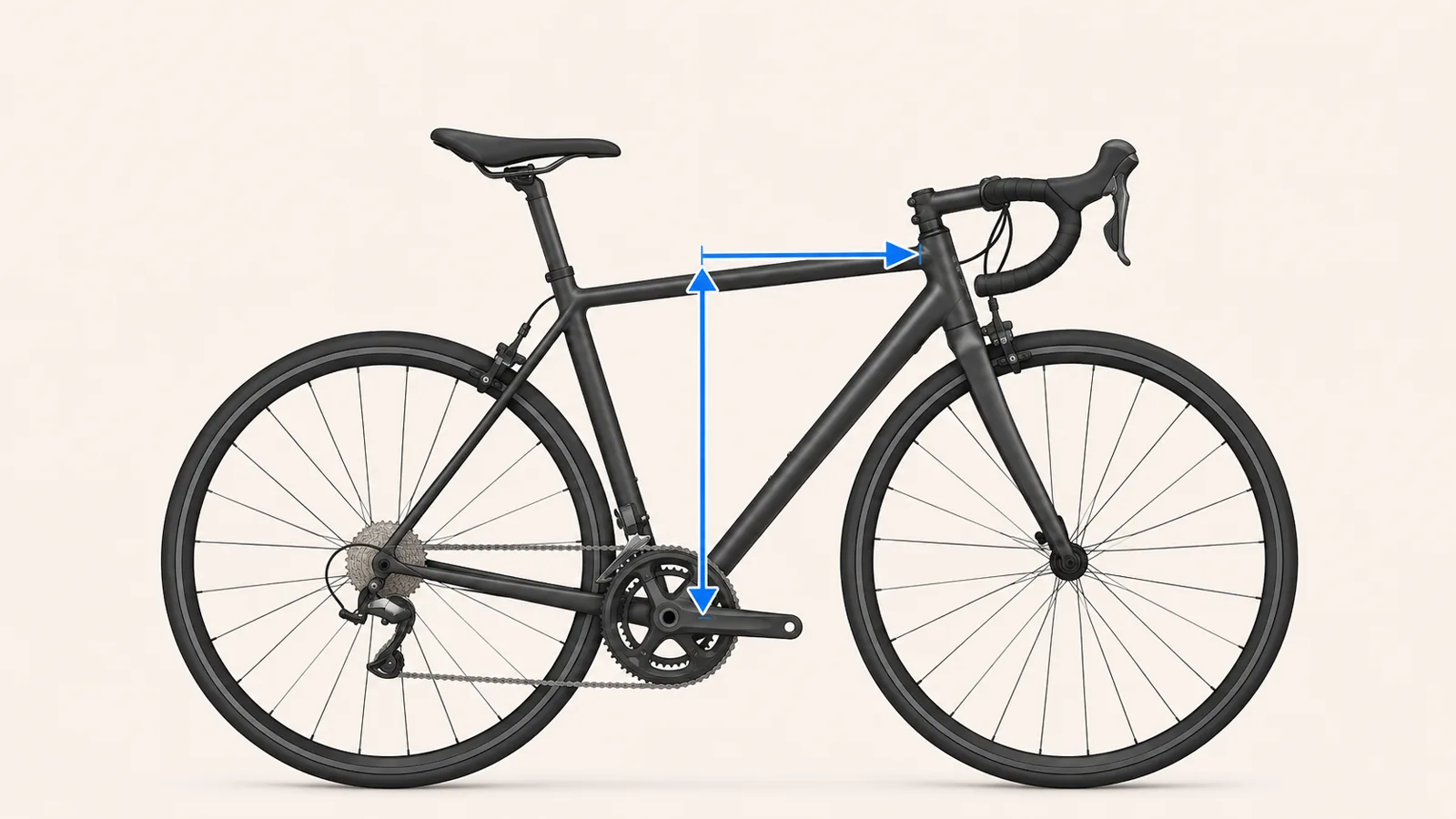
What is stack?
Stack is the vertical distance from the bottom bracket to the top of the head tube. In simple terms, it tells you how high the front of the frame is.
A higher stack usually gives a more upright position. A lower stack usually gives a more aggressive and lower handlebar position. Stack is especially important for riders who want comfort, endurance fit, or less pressure on the hands.
What is reach?
Reach is the horizontal distance from the bottom bracket to the top of the head tube. It tells you how long the front of the frame feels before adding stem length and handlebar shape.
A longer reach can feel stretched and sporty. A shorter reach can feel compact and easier to control. Reach is very useful because it is less affected by seatpost height than top tube length.
Why stack and reach beat size labels
A “medium” frame can have very different geometry depending on brand and bike category. Stack and reach allow you to compare frames using actual measurements instead of marketing labels.
For example, an endurance road bike may have a higher stack and shorter reach than a race bike in the same nominal size. On paper both may be size M, but on the road they can feel completely different.
How to use stack and reach before buying
Start by checking the stack and reach of a bike that already fits you well. Then compare those values with the new bike. Small differences can often be adjusted with stem length, spacers and handlebar choice. Large differences may indicate that the frame size or model is not ideal.
Do not look at stack and reach alone. Seat tube angle, head tube length, stem, handlebar reach and saddle position also affect the final fit.
Compare stack and reach
FAQ
Is higher stack more comfortable?
Often yes, because it can allow a more upright position, but comfort also depends on reach, saddle position and cockpit setup.
Is longer reach better for speed?
Not automatically. A longer reach can feel efficient for some riders, but too much reach causes discomfort and poor control.
Can I fix reach with a shorter stem?
Small changes can be adjusted with stem length, but a frame that is much too long is hard to fix well.
Are stack and reach useful for mountain bikes?
Yes, but MTB fit also depends heavily on riding style, wheelbase, head angle and intended terrain.
Internal links recommended
Stack and reach are excellent comparison tools, but they do not replace a complete fit check. Use them together with body measurements, riding goals and component setup.