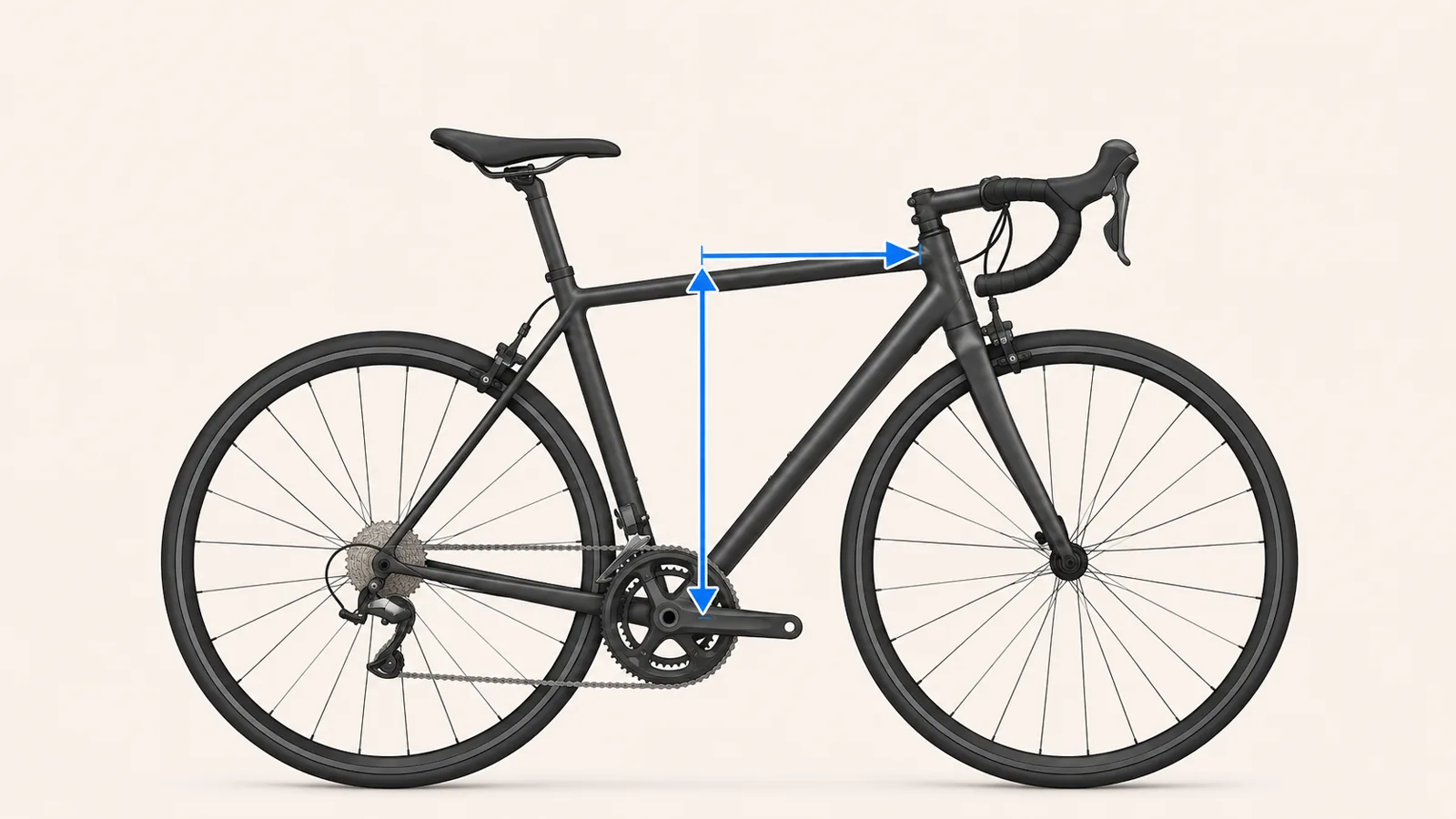
Frame size and seat tube length
Frame size is often linked to seat tube length, but this value is not enough to choose a bike. Modern frames can have sloping top tubes, compact designs and different seat tube shapes.
Seat tube length mainly helps understand frame height and exposed seatpost. It should be read together with standover height, stack, reach and effective top tube.
Stack and reach
Stack and reach are the best starting point for understanding fit. Stack tells you how tall the front of the frame is. Reach tells you how long the frame feels.
If two bikes have similar stack and reach, they may offer a similar starting position even if the size label is different. This is why geometry numbers are more useful than simply choosing S, M or L.
Head tube angle and wheelbase
Head tube angle affects steering feel. A steeper head angle usually feels quicker. A slacker head angle usually feels more stable, especially downhill or on rough terrain.
Wheelbase is the distance between the front and rear wheel axles. A longer wheelbase usually improves stability. A shorter wheelbase usually feels more agile.
Standover height and clearance
Standover height is the height of the top tube area from the ground. It matters when standing over the bike, especially for gravel, MTB and city riding.
Enough clearance helps with safety and confidence when stopping quickly or riding uneven surfaces. It is less important for pure pedaling efficiency, but still useful for practical fit.
Effective top tube and seat tube angle
Effective top tube helps estimate cockpit length, but it should not be used alone. Seat tube angle changes where the saddle sits relative to the bottom bracket and can make the bike feel longer or shorter.
This is why two bikes with the same effective top tube can feel different once the saddle is set correctly.
FAQ
What is the most important geometry number?
For fit, stack and reach are usually the most useful starting values.
Can I compare sizes across brands?
Yes, but compare geometry numbers, not only size names.
What does a longer wheelbase do?
It usually makes the bike feel more stable, but sometimes less quick to turn.
Is standover height enough to choose a frame?
No. It helps check clearance, but it does not define your riding position.
Internal links recommended
Geometry charts are useful, but they describe the frame before final setup. Saddle height, stem length, spacers, handlebar shape and personal mobility all change the real riding position.