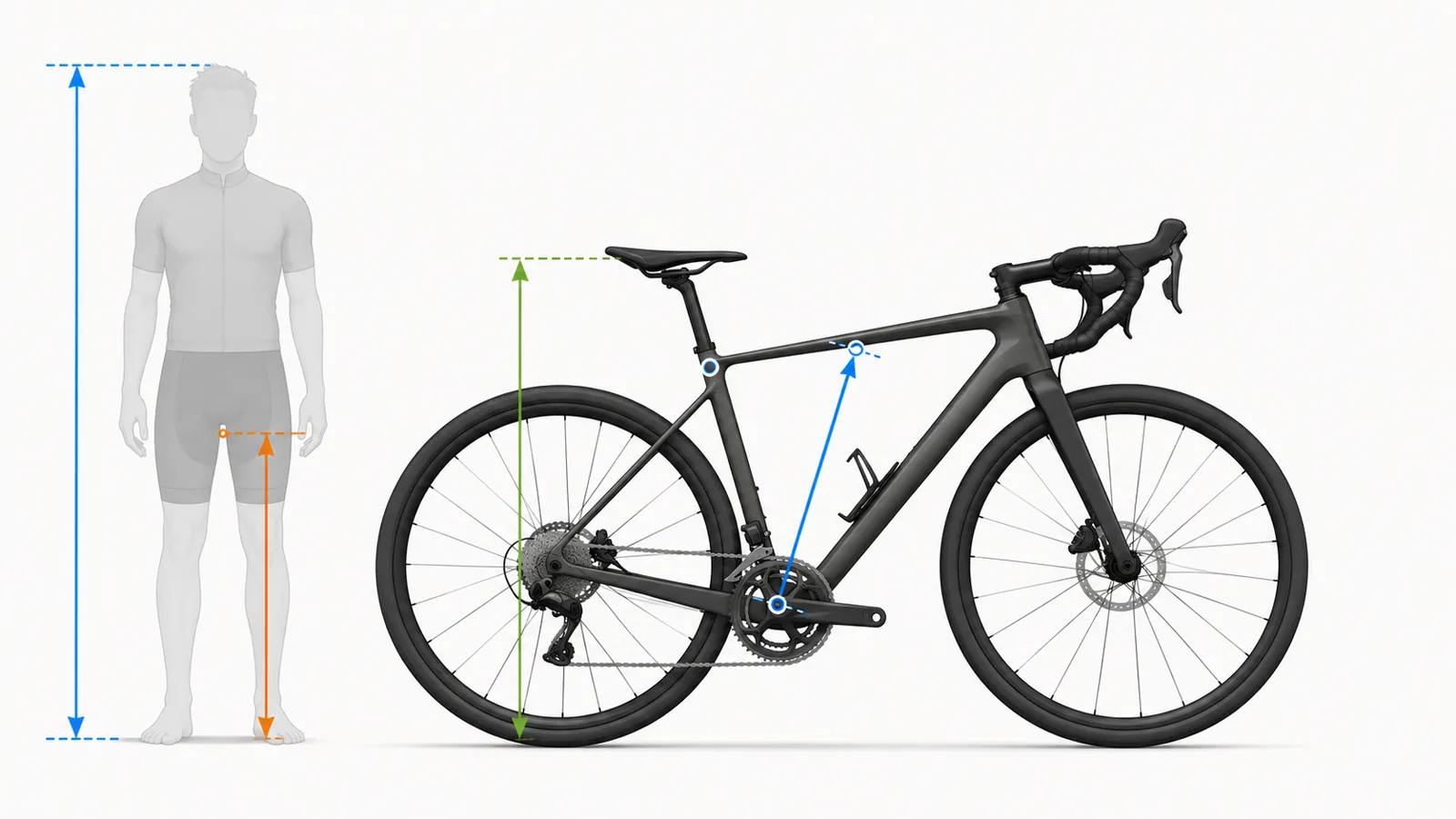
Why gravel bike sizing is different
A gravel bike is often used on mixed surfaces: asphalt, compact dirt, loose gravel and light trails. For this reason, the best size should let you pedal efficiently without making the bike nervous on rough ground.
Compared with a pure road bike, many riders prefer a slightly more relaxed position on gravel. A frame that is too long can feel fast on smooth roads but tiring on long rides. A frame that is too small can feel agile but may become unstable when loaded with bags or ridden downhill.
Start from height and inseam
Height gives a first size range, but inseam is usually more useful for checking standover clearance and saddle position. Two riders with the same height can need different frame sizes if one has longer legs and a shorter torso.
As a practical starting point, check the manufacturer size chart, then compare your inseam with the frame standover height. You should have enough clearance when standing over the top tube, especially if you ride uneven terrain.
Check stack and reach
Stack and reach are the best geometry values for comparing gravel frames across brands. Stack affects handlebar height. Reach affects how stretched you feel.
A higher stack usually gives a more upright and comfortable position. A longer reach gives a more extended position, which can feel efficient but less forgiving. For long gravel rides, many riders prefer moderate reach and enough stack to avoid excessive pressure on hands and shoulders.
Gravel race vs adventure: different geometry
A gravel race bike has geometry close to a road bike: long reach, moderate stack, steeper head angle. Built for speed on compact dirt and racing.
A gravel adventure bike has higher stack, often shorter reach, clearance for wide tires (40–50 mm) and mounts for bags. Built for comfort over long distances and mixed surfaces.
At the same size, a race frame feels more "forward" and sporty, an adventure frame more "upright" and relaxed. If you come from a road bike, the race will feel familiar. If you want comfort for bikepacking or 6+ hour rides, the adventure may work better.
Between two sizes: smaller or larger?
If you are between two gravel bike sizes, the better choice depends on your riding style. A smaller size can feel more responsive and easier to handle on technical sections. A larger size can feel more stable at speed and better for long-distance riding.
Do not choose only by the letter printed on the frame. One brand’s M can be close to another brand’s L. Compare stack, reach, effective top tube and seat tube angle before deciding.
FAQ
Can I use my road bike size for a gravel bike?
Sometimes, but not always. Gravel geometry is often more relaxed, so the same nominal size can feel different.
Should a gravel bike be smaller than a road bike?
Some riders size down for control, but it is not a rule. Geometry and riding style matter more than the label.
Is standover clearance important on gravel?
Yes. Extra clearance helps when stopping or dismounting on uneven terrain.
What is more important, stack or reach?
Both matter. Stack influences handlebar height, while reach influences cockpit length and body position.
Internal links recommended
BikeSize can help you estimate a sensible gravel bike size, but final fit depends on frame geometry, components, flexibility and riding habits. When possible, test the bike or compare it with a bike you already ride comfortably.
Endurance gravel or race gravel
An endurance gravel bike favours higher stack, stability and long-distance comfort. A race gravel bike can feel longer and lower: if you are between sizes, judge the position by the hours you spend off-road, not by the label alone.