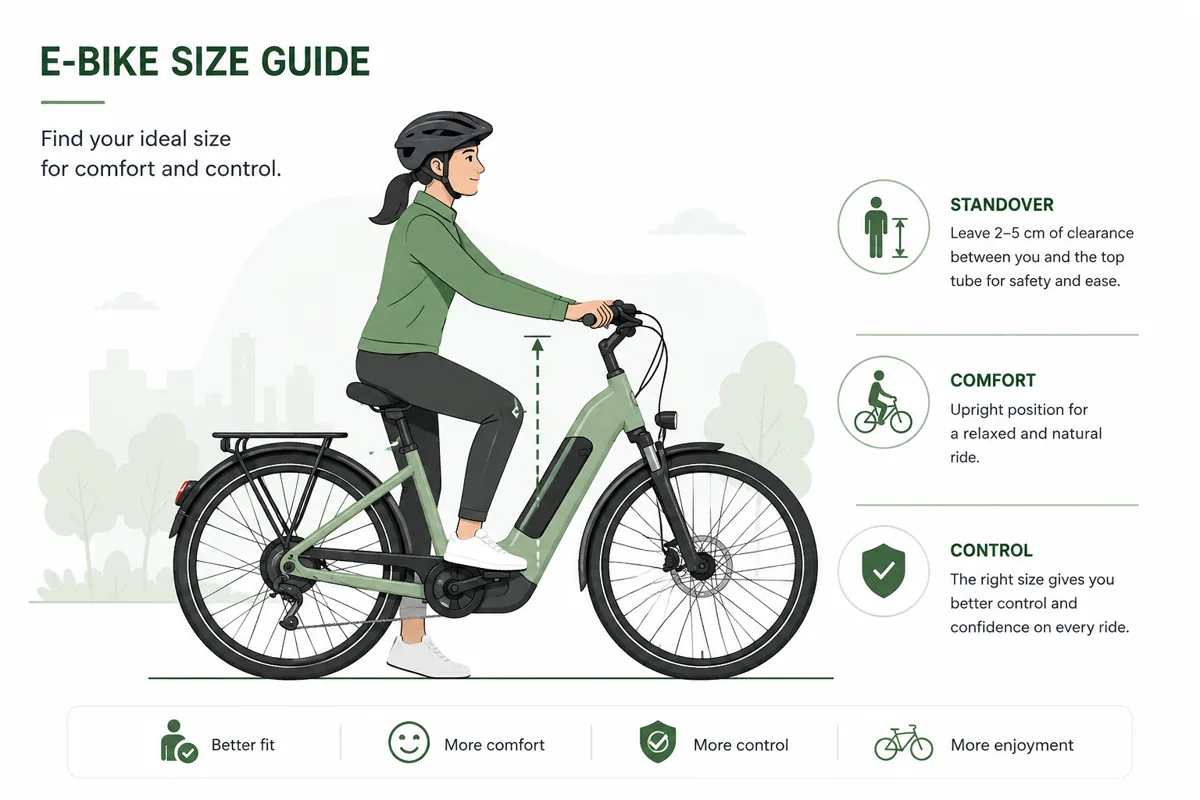
Quick guide
- Use height and inseam as a starting point
- Check standover, reach and handlebar height
- Consider bike weight and intended use
- Compare the result with the brand size chart
Enter height and inseam in the calculator above to get your result.
Why e-bike sizing feels different
An e-bike is heavier than a traditional bike. That changes low-speed handling, stops, starts and how confident you feel when putting a foot down.
For city and trekking e-bikes, comfort and control matter most. For e-MTBs, reach, stack and room to move above the frame become more important.
How to estimate size
Use height and inseam first. Then check whether the cockpit feels natural: you should not be stretched too far or cramped around the knees.
If the battery is integrated into the down tube, the frame can feel bulkier. Standover and easy mounting matter more than they do on a light road bike.
If you are between sizes
For city use, pick the size that feels easier to control. For faster or sportier riding, a longer size can feel stable, but only if reach and handlebar position stay manageable.
FAQ
Do e-bikes fit like regular bikes?
The starting point is similar, but motor weight, battery position and intended use make control and comfort especially important.
What if I am between two e-bike sizes?
For city and trekking use, choose the size that feels easier to control; for sport use, compare reach and stack carefully.
Useful links
City e-bikes vs e-MTBs: different sizing logic
A city or trekking e-bike prioritises standover clearance and easy mounting. The motor and battery often sit low on the frame, which lowers the centre of gravity but can reduce standover height. If you use clipless pedals or cycle in urban traffic, give extra weight to easy foot-down access.
An e-MTB needs enough room to move dynamically above the frame. A shorter reach than on a standard MTB is common because the added weight already slows handling. Check that the standover leaves at least 5–8 cm of clearance when standing flat-footed.
Battery and motor placement
Mid-drive motors (Bosch, Shimano, Fazua) sit at the bottom bracket. They keep weight central and low but can make the frame look bulkier. Hub motors move weight to the rear wheel and change how the bike responds when steering at low speed. Neither affects your size choice directly, but both affect how the bike feels once you are on it.
Check the battery location: a downtube-integrated battery raises the stand-over height visually, even if the actual clearance is unchanged. Some integrated designs remove the ability to remove the battery easily — factor that in if storage matters.
Common e-bike sizing mistakes
- Choosing a larger size hoping for more comfort — a bike that is too big is harder to control at low speed and harder to park.
- Ignoring standover completely — with a heavier bike, a quick dismount matters more than on a light road bike.
- Using a size chart from a non-electric model of the same brand — geometry tables for e-bike versions often differ from acoustic equivalents.
- Not test-riding — even a short test at low speed reveals whether the reach and handlebar height feel right under motor load.