In brief
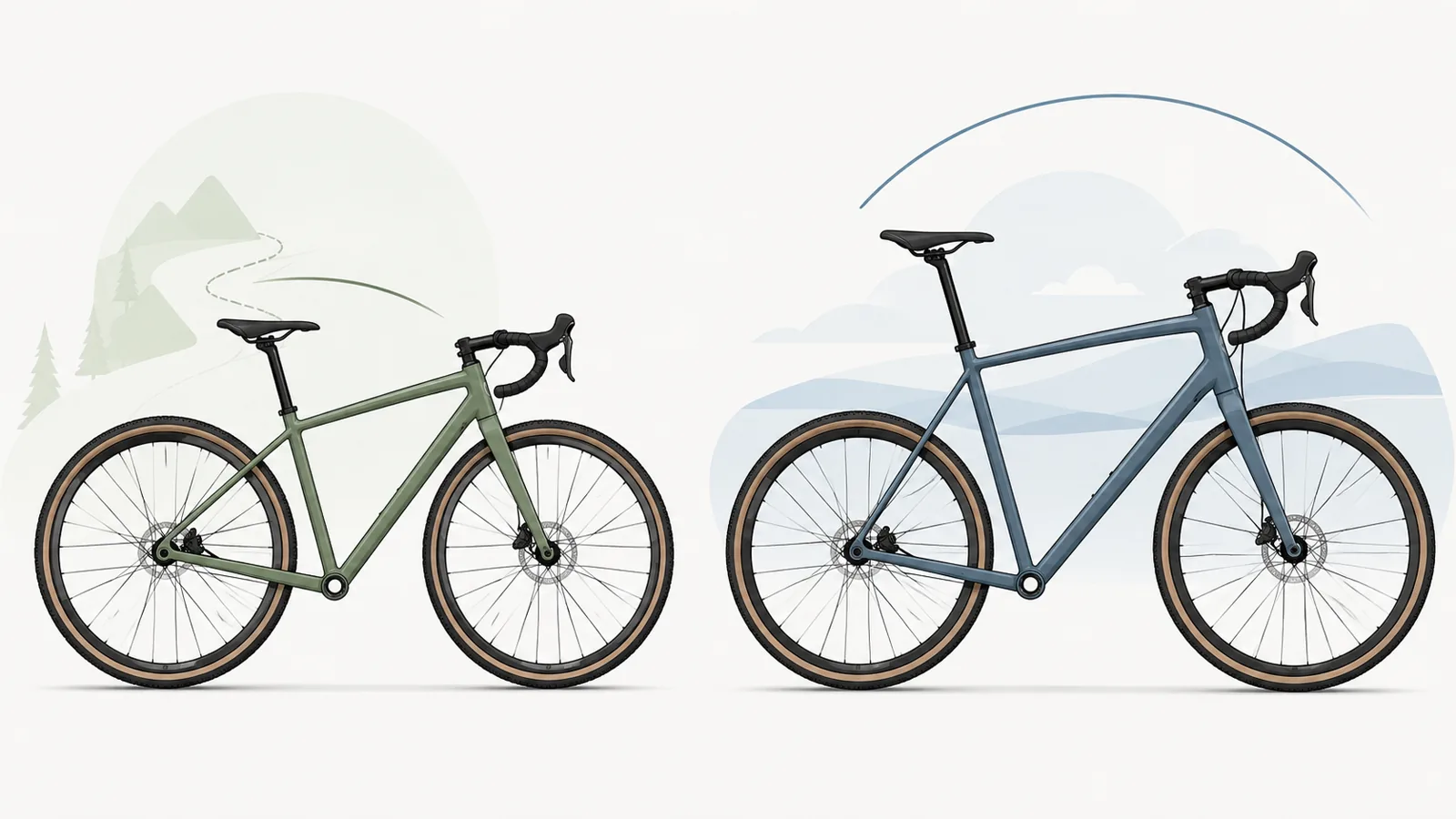
Choose the smaller size for a more agile, compact and sporty feel. Choose the larger size for more stability, comfort and a stretched position. Always check reach, stack and standover. When possible, test both sizes.
Why you may fall between two sizes
Manufacturer size charts use ranges. If your height or inseam falls near the edge of a range, two sizes may both appear possible.
Example: size M recommended for 170-178 cm and size L for 176-184 cm. If you are 177 cm tall, both may look valid. Helpful, yes. Decisive, not quite.
When to choose the smaller size
The smaller size can make sense if you want more control, quicker handling, a compact position and easier changes of direction. It is often preferred for sportier or more technical use.
On MTBs, a slightly smaller size can feel more manageable, although modern geometry matters a lot. On road bikes, a smaller frame can sometimes be adjusted with stem and seatpost choices, but there are limits. A clearly wrong size cannot be fully corrected with components.
When to choose the larger size
The larger size can make sense if you want a more stretched position, greater stability, more comfort on longer rides and a calmer feel.
It can work well for endurance riding or relaxed use. But if the frame is too long, you may end up reaching too far toward the handlebar, loading hands, shoulders and neck.
What to check besides size
Look at reach, stack, effective top tube length, standover height, stem length, saddle setback and handlebar type.
Two bikes labelled M can feel completely different. One may be short and upright, the other long and aggressive. The letter on the frame is only the headline. The geometry table is the actual story.
Road bike, MTB and city bike differences
On road bikes, reach is especially important because the riding position is more stretched. A frame that is too long can overload hands, neck and lower back.
On MTBs, control and terrain matter more. Modern MTBs often have longer reach and shorter stems, so the specific geometry chart is essential.
On trekking and city bikes, comfort and easy foot-down control are often more important than a highly athletic position.
Practical rule for deciding
Choose the smaller size if you want agility, a compact feel or technical handling. Choose the larger size if you want comfort, stability and a more relaxed position.
Then check reach and stack, compare the manufacturer’s size chart and test both sizes if possible. This rule is useful, not sacred. Humanity has already created enough sacred nonsense.
FAQ
If I am between two bike sizes, should I go bigger or smaller?
It depends on use. Smaller usually feels more agile. Larger usually feels more stable and stretched.
Can I fix the wrong size with saddle and handlebar adjustments?
Only within limits. Small differences can be adjusted, but a clearly wrong frame size remains wrong.
Is the smaller size always sportier?
Often, but not always. Geometry matters more than the size letter alone.
Is the manufacturer’s chart more important than the calculator?
Yes. The calculator gives an indicative estimate. The manufacturer’s chart is specific to that model.
Recommended internal links
Being between two sizes is normal. Use BikeSize to orient yourself, but always compare the result with the manufacturer’s chart and, when possible, test the real bike. Geometry matters more than the label printed on the frame.